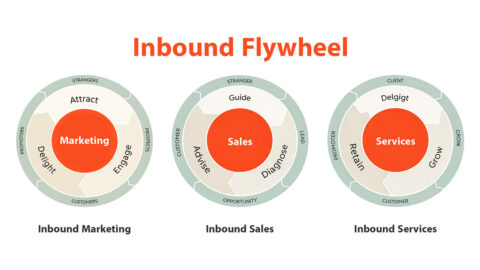
Inbound is a business philosophy based around helping people. Inbound is a better way to market, a better way to sell, and a better way to help your customers. Because when good-for-the-customer means good-for-the-business, your company can grow better over the long term.
Statistics:
- 94% of consumers have discontinued communications with a company because of irrelevant promotions or messages.
- 74% of people are likely to switch brands if they find the purchasing process too difficult.
- 51% of customers will never do business with that company again after one negative experience.
- 93% of consumers said they are more likely to be repeat customers at companies with remarkable service.
- 77% of consumers shared positive experiences with their friends or on social media and review sites in the last year.
What Is Inbound Methodology?
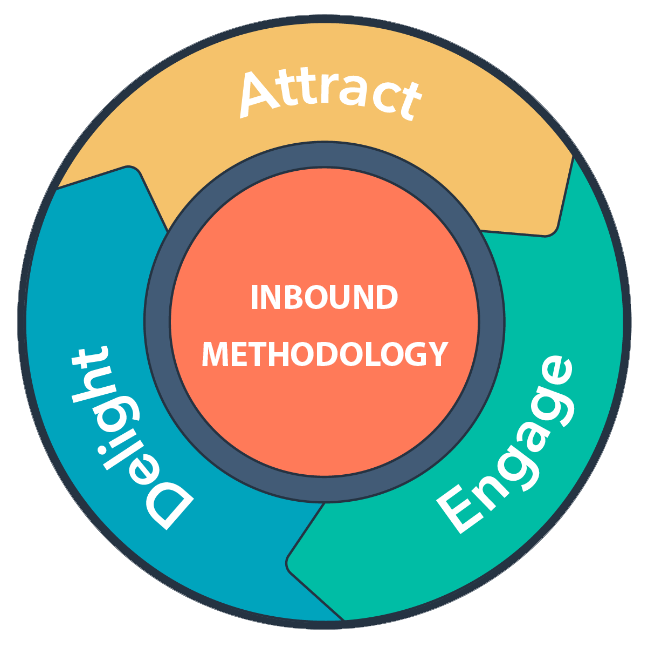
It illustrates the three stages each of your marketing, sales, and service teams will use to create and maintain relationships with people. These stages are attract, engage, and delight.
Attract:
- For a Marketer: Creating helpful content and experiences that demonstrate your knowledge
- For a Sales Representative: Making yourself available for meetings, calls, or live chat
- For Services Representative: Using knowledge documents and chatbots to make information easy to find
Engage:
- Begins the moment a person takes the desired action.
- In this stage, you begin to collect information about the individual you’re working with.
- By focusing on what motivates your audience and having the expertise to solve for their needs, you become a resource.
- The manner in which you build trust with your contacts will depend on the unique needs of your business.
Delight:
- Revolves around providing an outstanding experience.
- You need to have a system in place to help delight those prospects or customers so that they become promoters.
- Make it as easy as humanly possible for people to find the answers they need.
- Ensure that you understand what motivates your prospects and customers.
- Find opportunities to provide additional insight or information.
- Every prospect is a potential customer.
- A customer isn’t truly a customer until they’ve had the chance to leave you and choose not to.
What are the fundamentals of an inbound business?
To do inbound, you need to be inbound.
Inbound Fundamentals:
- Inbound principles
- Standardize for Consistency
- Contextualize for Relevance
- Optimize for Clarity
- Personalize for Impact
- Empathize for Perspective
- Company purpose
- To inspire your staff to do good work for you, find a way to express the organization’s impact on the lives of customers, clients, students, patients whomever you’re trying to serve. Make them feel it.
- Business goals
- Maybe you think of the destination.
- Maybe you think about the journey.
- Maybe you think about the now.
- Buyer personas
- Semi-fictional representations of your ideal customer based on real data and some educated speculation about demographics, behaviors, motivations, and goals.
- Buyer’s journey
- Awareness Stage.
- Consideration Stage.
- Decision Stage.
What does this mean?
- Your customers have their own type of journey.
- Your contacts truly are the heart for every piece of your marketing, sales, and service strategy.
- If buying behaviors continuously evolve, so will the tactics and tools that you’ll use to reach them.
What is a flywheel?
A flywheel is a machine that stores rotational energy. When you add energy to a flywheel, it starts to spin. If you add more energy to it, it spins faster. And unlike a funnel, where the only way to maintain a constant speed is to keep adding stuff to it, a flywheel will keep spinning unless some other force comes along and slows it down.
From a business perspective, the rotation of the flywheel represents the growth of your business, and happy customers provide the energy that fuels that growth, either because they buy from you again or because they bring new customers to you by promoting your product to other people in their network.
Not every customer you have is going to have a fantastic experience, is going to stick around forever. You’re always going to have customers who cancel in turn and leave you. But I think that’s a great opportunity, not just to write that customer off, but to make sure they have a positive experience on the way out. We talk about how your current customers are a great lever for future acquisition; those customers who leave you are also going to either refer or recommend your product to other people in the future. So, it’s really important that even those people who may be dissatisfied with a product or plan to cancel, leave on good terms. You want to break up and remain friends because those customers who do leave you will probably continue to refer your product and service in the future.
Even when you’re working with unhappy customers, you need to do all you can to ensure they have as good an experience as possible. Everything you do should be done to create customers who will add positive energy to the flywheel and accelerate your company’s growth.
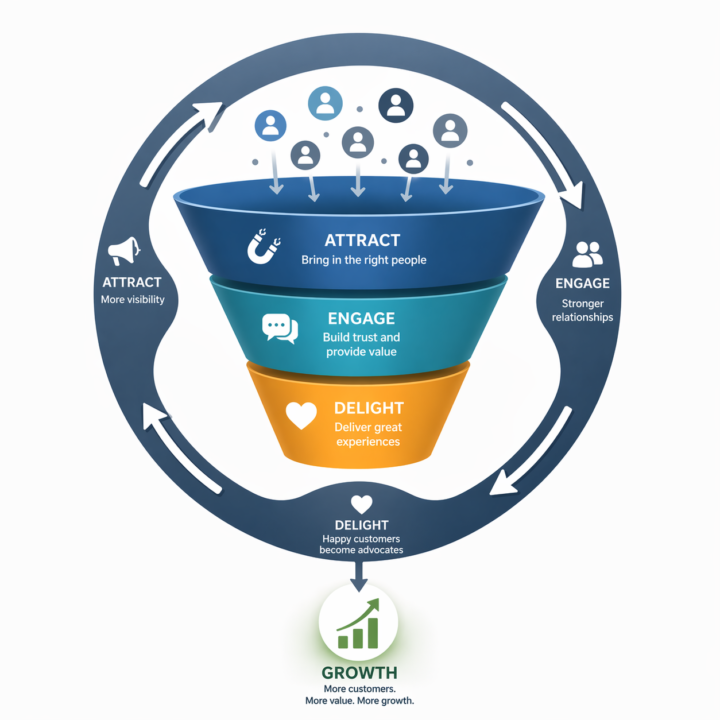
That’s why the inbound methodology is a circle. It represents the flywheel that will drive your company’s growth. By attracting customers who have a problem you can solve, by engaging with them on their own terms, and by delighting them at every stage of their buyer’s journey, you’ll create the momentum that will drive your company’s growth. This is a huge advantage over the typical funnel viewpoint because it means that you aren’t alone in helping your company grow–you have all of those faithful customers helping your company grow, too. And that’s a much better way to grow.
Combining funnels and flywheels
Let’s talk about how funnels and flywheels fit together. Because funnels aren’t going away. The flywheel represents your company as a whole, but you’ll still have funnel-shaped charts and graphs representing the effectiveness of different processes within your company, and it’s important to make sure those funnels are fueling your flywheel.
The most important of these funnels is your sales process. Your sales process defines the steps your sales team helps a qualified lead complete on their way to becoming a customer. If you look at a chart of your historical sales data, you’ll probably find that a lot of people make it to the first step of your sales process, a slightly lower number of people make it to the second step, and so on until the final step, which the least number of people make it to.
This is a good example of one way to use a funnel chart to improve a particular aspect of your business performance. Thinking of your business in terms of a flywheel shouldn’t detract from any of this. In fact, by layering flywheel thinking on top of your funnel charts, you’ll be able to find even more places where your processes can be improved. By realizing that, even though your sales process can easily be visualized as a funnel, it’s actually one piece of a larger flywheel, you’ll be able to put that funnel chart into the context of a larger one.
Creating a Company Purpose (Why was your company founded?)
Common Founding Story:
- The founder sees that they can solve a particular problem for a particular group of people and creates a company to do just that.
Example:
Khan Academy is a web-based company that offers free online tutoring on a variety of school subjects. It didn’t originally start as a business. Sal Khan just wanted to help his cousins with their math homework, so he started making YouTube videos for them. It turns out Sal’s cousins weren’t the only ones who needed help with math, and when he realized how many people his videos were helping, he figured out a way to start a company that could provide free education for anyone who needed it.
Khan Academy courses have now been translated into dozens of languages and reach 100 million people every year, all because Sal Khan wanted to help his cousins with their math homework. That’s a pretty common way for a company to start: The founder sees that they can solve a particular problem for a particular group of people and creates a company to do just that
- The founder is their own target customer.
Example:
Pleasant Rowland, who invented the American Girl doll. She wanted to buy a doll for her niece and was disappointed that her primary options were hyper-sexualized Barbie Dolls and shapeless Cabbage Patch dolls. So Pleasant thought back to her childhood and tried to remember all the things that made her excited to play with a doll, and then she founded a company that didn’t just manufacture dolls but provided fantastic experiences both for the grown-up who buys the doll and the child who plays with it.
Each doll gets an identity and a backstory, complete with a book parents and children can enjoy together. Over the years, American Girl expanded from dolls and books sold through a printed catalog to an enormous ecosystem of dedicated retail stores, restaurants, and beauty parlors.
Both companies have remained true to the missions they were founded to achieve. Many companies lose sight of their missions once they reach a certain level of success. So, if you are product-oriented instead of customer-oriented, you will fail.
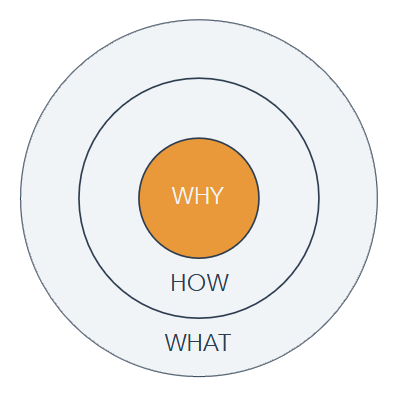
The Golden Circle
If the leader of the organization can’t clearly articulate WHY the organization exists in terms beyond its products or services, then how does he expect the employees to know WHY to come to work?
A company’s culture is the environment that defines and informs HOW employees act on behalf of customers and HOW the company hires, retains, and grows its people.
Your culture is WHAT of the product that you offer and the service and promise you make to your customers.
Work Backwards from the time the person bought your product, ask them:
- Why did they buy it?
- How long did they think about it before they made the decision?
- What was it that made them finally go through with the sale?
- Had they thought about buying before and not done it?
- Were they using something else (or nothing at all)?
- When did they realize, they didn’t have to make it the old way anymore?
What are your Job Dimensions?
- Functional requirements: What’s the minimum functionality required to get the job done?
- Financial requirement: What are the monetary guardrails I need to stay in to make this financially feasible?
- Personal identity: How does this product or service act as a symbol to represent what I believe about the world?
- Social appearance: How will others view me while I use this product or service?
Compare your customers’ job story to your company’s purpose as it’s understood internally. In many companies, they don’t match up very well at all. You need to align your entire organization around helping a particular kind of person overcome a particular challenge.
Identifying your company’s purpose is only the first step in the much larger challenge of rallying your company around that purpose. You need to get your entire company aligned around solving the customer’s problem. Make sure every employee believes in your company’s purpose, and then trust them to find their own way to support it.
If you can foster a culture of customer obsession within the ranks of your employees, you’ll have a competitive advantage that no one will be able to take away from you
Setting Business Goals
Why do you need to set business goals?
Maybe you think of the destination, maybe you think in the journey, or maybe you think of now what should I get, every business is going to face its own unique set of challenges or roadblocks.
The difference between where you are and where you want to be can quickly feel insurmountable.
Great dreams aren’t just visions, they’re visions coupled to strategies for making them real.
We use the word ‘moonshots’ to remind us to keep our visions big — to keep dreaming. And we use the word ‘factory’ to remind ourselves that we want to have concrete visions — concrete plans to make them real.
Hope is not a strategy.
Goals can help you establish a consistent standard for high performance and productivity.
How to set a goal that aligns with your company’s purpose?
Also known as OKRs, objectives and key results is a goal setting system that helps to ensure that the company focuses efforts on the same important issues throughout the organization. Think of OKR setting as a way to connect company, team, and personal goals, making sure all employees work together in one unified direction. Key results are numeric.
You can align objective and key results (OKRs) perfectly with your company purpose, mission, or vision to create a north star that everyone can look to as a guide.
No organization or individual can focus on or accomplish more than five or six priorities in a given time period.
OKRs are meant to fit the needs of companies at any stage of growth.
So, whether you’re a team of one or a team of many, OKRs can help you grow better.
Effective KRs are specific and timebound, aggressive, yet realistic. Most of all, they are measurable and verifiable.
Types of KR (Key Results):
Speaking of timing, let’s talk grading. Key results can be graded using two different methods: setting numeric key results and binary key results. The first type is used to calculate the completed percentage of an activity on a scale of 0 to 1.0.
- Numeric Key Results:
Example: let’s say you were to set an objective to maximize sales effort for every region. Your key result is to have 100 new customers within the next 3 months. If the team is able to sell to 70 new customers, then it can be said that it has achieved a 0.7, or 70% of its target. Remember, as OKRs should be aggressive, you should typically aim to hit in the 0.6 – 0.7 range, or 60-70% of your goal. - Binary key results: (Then, there are binary key results, where ratings can be a simple 1 or 0. You either meet the KRs requirements or you don’t.)
Example: let’s say you have an objective to increase brand awareness as a retailer. Your key result is to open another location over the course of the next quarter. If, after the quarter ends, you opened that location, your OKR would be marked with a yes, or a 1. If after the quarter is out, and you didn’t open that location, it’s a no and the OKR would be marked with a 0.
How to prioritize short-term and long-term business goals?
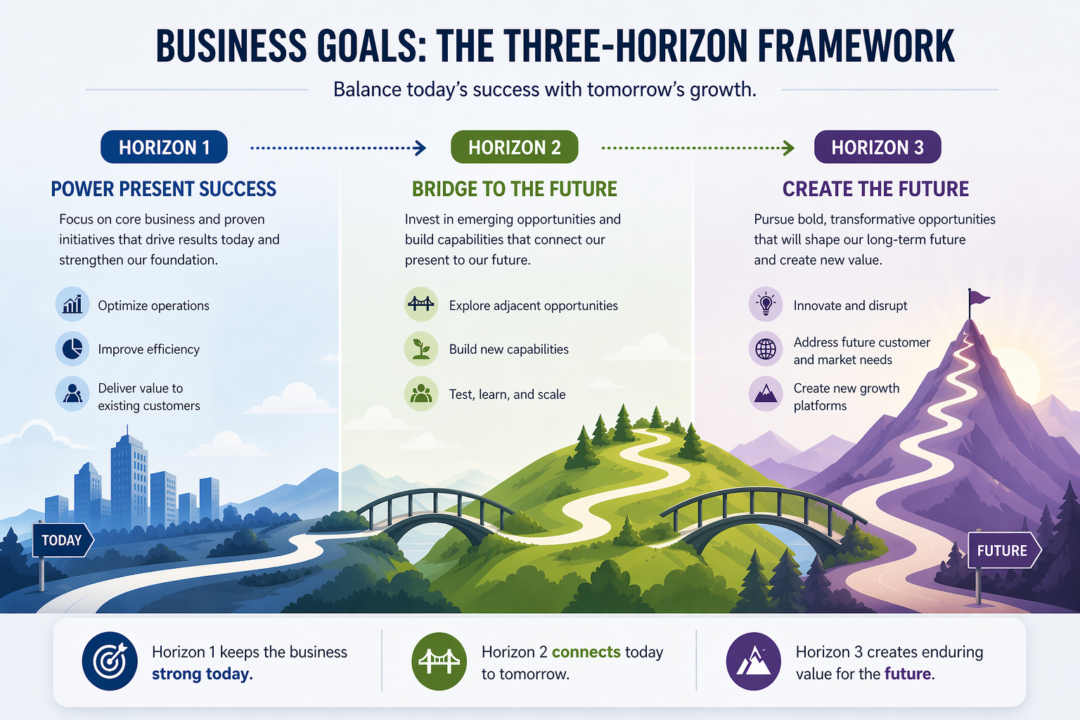
The problem starts when businesses start to only focus on the future and lose sight of what they need to action and prioritize in the present.
The three-horizon framework is a way to conceptualize what your business wants to accomplish in the short-term, mid-term, and long-term:
- Think of horizon one as the initiatives you take to power present success:
Here, you’re identifying your biggest assets and doubling down on them to ensure your business continues to be successful. Intuitively, the majority of your time and resources (Around 70%) will be spent executing on the horizon one plays.
- The third horizon goals and objectives focus entirely on the future:
Having a horizon three helps you stay connected with your long-term goals without sacrificing attention or connection with what needs to get done today. (Around 10%) - Horizon two goals and strategies help bridge your first and third horizons.
is where your business genuinely begins to transform and lean into emerging innovations in its industry, without completely losing sight of what made horizon one so successful. (Around 20%)
It’s important that you keep the balance: 70/20/10 to ensure sustainable, long-term growth.
Creating Buyer Personas
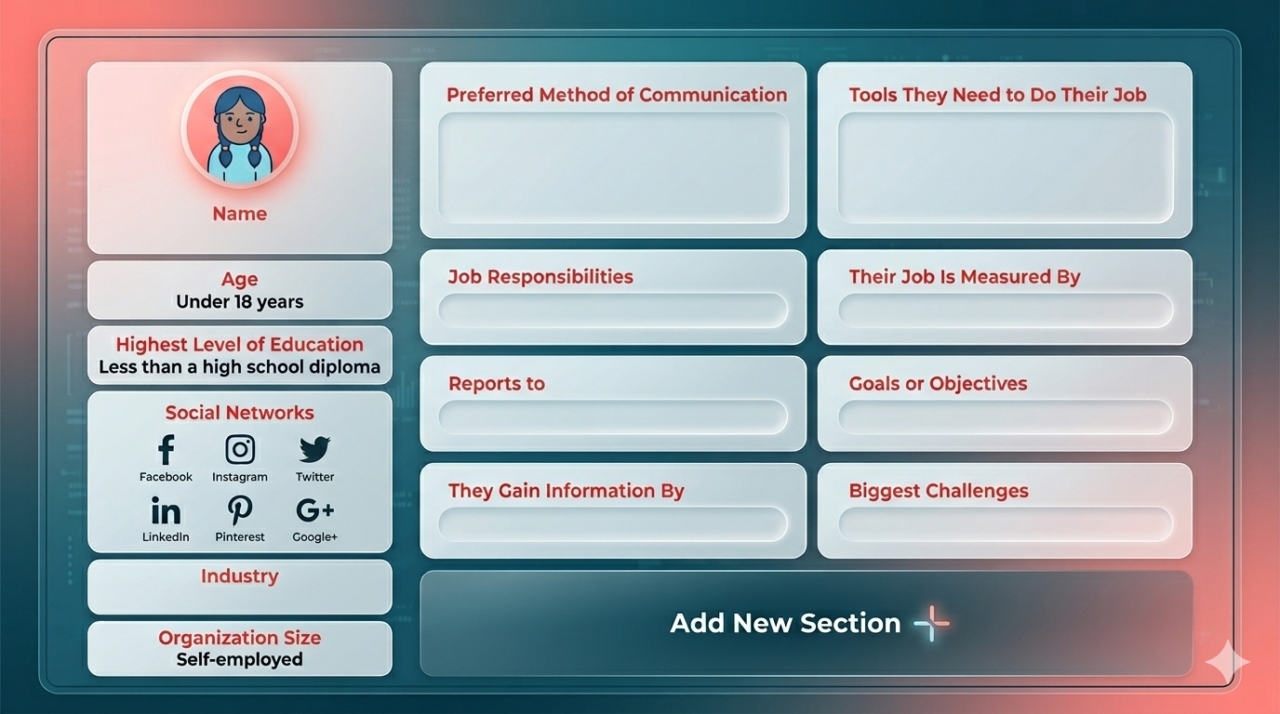
What is buyer persona?
A semi-fictional representation of your ideal buyer based on data, interviews, and some educated guesses.
Why are buyer personas an important part of your inbound strategy?
if you can create a single, unified persona that is robust enough to guide your marketing campaigns, your sales conversations, and your services activities, your customers will enjoy a seamless end-to-end experience, and your internal teams will enjoy the benefits of being well aligned with each other.
How to create a buyer persona?
- Who should create your persona?
The creation of your buyer personas should include input from as many different perspectives within your company as possible. In addition to these customer-facing teams, your back-office teams might also have important contributions to make. And the more viewpoints you can include in the persona creation process, the better the final personas will be. - How to create your persona?
- Define the information that should be included:
If you have a concrete understanding of the problem your company is meant to solve, that will form the foundation of your buyer persona. Have your customer service team identify any commonalities among your most successful customers. Have marketing, sales, and customer service list out the questions they need answered in order to serve each persona.- Information Marketing Needs:
- How does a persona phrase their problem when they type it into Google?
- Where does each persona go to get help with their problem?
- What channels of communication do they prefer to be contacted through?
- Demographic information (helps with tone, languages, and imagery)
- Information Sales Needs:
- How high of a priority is overcoming this problem?
- What kinds of goals is this problem preventing the persona from achieving?
- Is this persona typically the only person involved in the purchasing decision?
- How long or short do they expect the sales process to be?
- Do they typically view your product’s price as being high, low, or about average?
- Information Services Need:
- What needs to happen in order for this persona to feel satisfied after purchasing your product?
- What aspects of your product do they find most confusing?
- What are their favorite features of your product?
- What kinds of things will make them happy enough that they’ll recommend your product to others?
- What kinds of things will upset them enough that they’ll recommend that people NOT buy your product?
- Information Marketing Needs:
- Identify the best sources for that information:
- Historical Data.
- Customer Interviews:
For each of your personas, you’ll want to interview about 15 people. And take good notes during these interviews and then look for common themes that show up from one customer to the next.
- Educated Guesses.
- Define the information that should be included:
- Ways your persona can be used by all of your teams:
Your personas should inform everything your customer-facing teams do. And make sure there are ways for marketing, sales, and service to all give feedback so your personas can be improved over time. And personas don’t replace the need to find out information about individual people.
Developing the Buyer’s Journey for Your Business
What is the Buyer’s Journey?
The active research process someone goes through leading up to a purchase.
Every potential buyer is focused on:
- Identifying their problem.
- Understanding what options could alleviate their problem.
- Comparing their top choices when they’re ready to make a purchase.
Using the buyer’s journey will help you attract, engage, and delight your prospects and customers by meeting them where they are and providing the needed guidance and value they’re seeking.
What are the stages of the buyer journey?
- Awareness Stage: When your prospect is experiencing and expressing symptoms of a problem or opportunity. The awareness stage does not mean that your prospect is now aware of your business. At this point, they’re just aware they have a problem.
- Consideration Stage: When your prospect has clearly defined and given a name to their problem or opportunity. In the consideration stage engagement is key.
- Decision Stage: When your prospect has decided on their solution strategy, method, or approach. Create content that answers questions about your product or service:
- Video
- Blog posts
- Pillar pages
- Webinars
The buyer’s journey is not just about the content you produce but the experience you provide.
By meeting your prospects where they are, you can reduce the friction leading up to making a purchase.
To keep your business’s flywheel spinning smoothly, you want to reduce friction as much as possible.
The buyer’s journey is a powerful tool you can use to personalize your prospects’ experiences with your business.
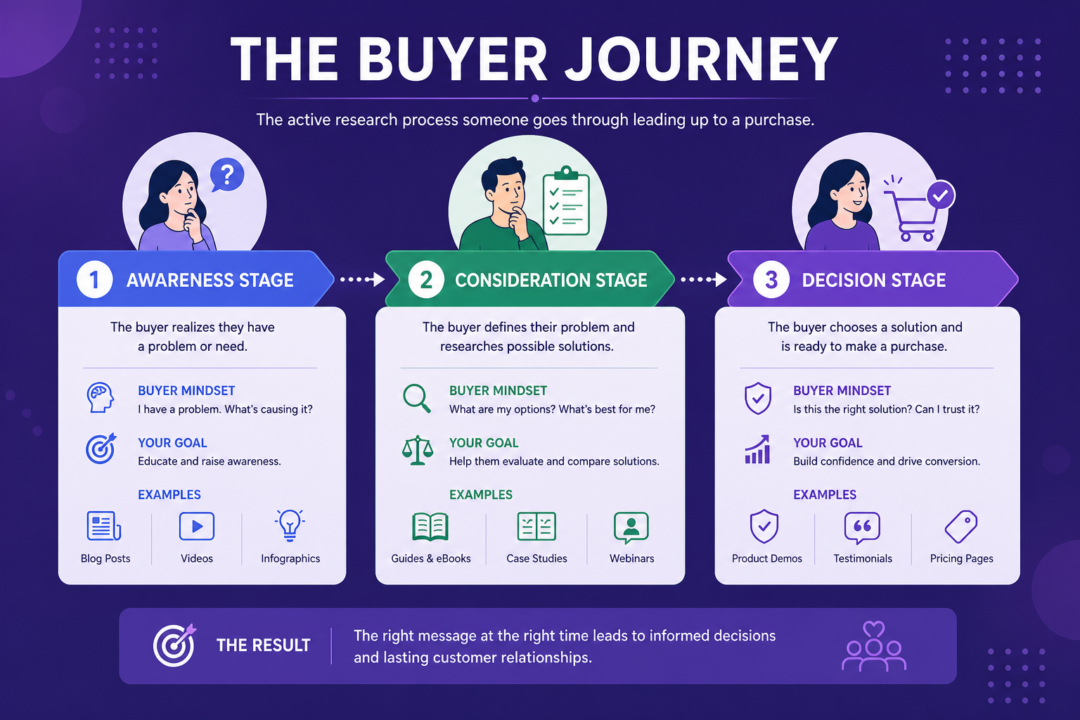
The Marketers: can use the buyer’s journey to create different content at every stage.
Use the buyer’s journey to segment and nurture your leads.
The Salespeople: can use the buyer’s journey to better understand how to sell to your prospects and guide them through the buyer’s journey.
The Service Professionals: can think of customers as having their own type of buyer’s journey.
Your marketing, sales, and service teams need to be aligned on the different stages of your buyer’s journey.
Knowing the buyer’s journey for your personas will be key to creating the best marketing, sales, and service experiences possible.
How do you create the buyer’s journey for your business?
Your buyer’s journey will be personalized to your personas to create a buying experience that will build trust and be human and helpful.
- Understand your buyer persona: By understanding their unique process of becoming aware of their problem, considering solutions, and deciding on the right solution, you’ll be able to create an effective inbound strategy.
- Develop each buyer’s journey stage around your business’s specific needs and persona’s intent:
Remember that inbound is all about building trust and creating human and helpful experiences throughout the stages of the inbound methodology.
Checkout the full course on inbound st HubSpot:
https://app-eu1.hubspot.com/academy/147097579/tracks/9181866/intro
posted by Emad Zedan on 06 Jun 2026 in Marketing